Why Your Therapist Will Never Be Your Friend—And How That Distance Is Exactly What Heals You
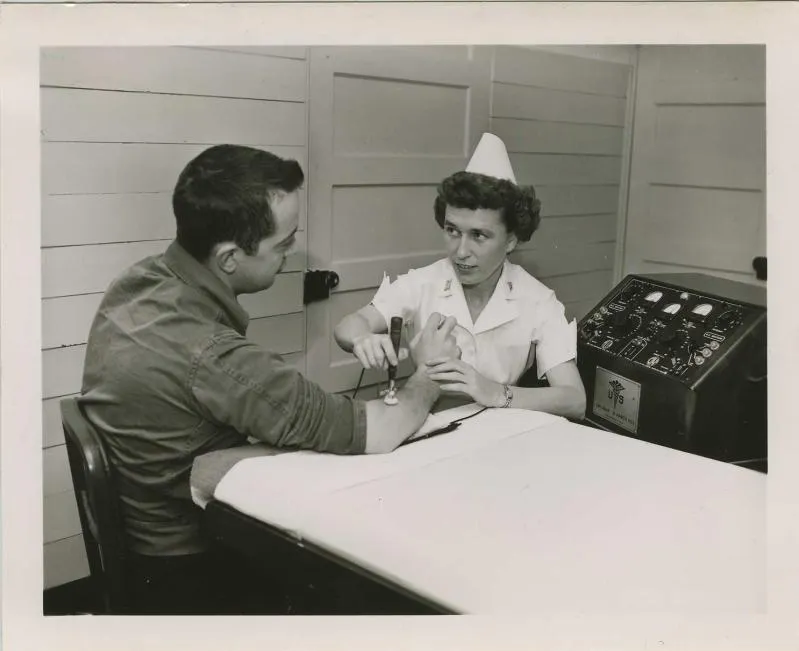
Photo: National Museum of Health and Medicine, CC BY 2.0, via Wikimedia Commons
The Moment Most Patients Feel the Distance
It often happens quietly. A patient shares something deeply personal—a childhood wound, a fear they have never spoken aloud—and the therapist listens with complete attentiveness. Then the patient asks, almost reflexively, "Has anything like this ever happened to you?"
The therapist redirects. Gently, professionally, but unmistakably.
For many people, this moment produces a subtle sting. It can feel like rejection, like an imbalance, like evidence that the relationship is somehow less than real. Some patients begin to wonder whether they have the "wrong" therapist—one who is too formal, too distant, not warm enough to truly help.
At Dr. Aliyeva Psychiatry, we hear this concern regularly. And the answer, while perhaps counterintuitive, is one of the most important things we can offer: the distance you feel in that moment is not a flaw in the therapeutic relationship. It is the therapeutic relationship working exactly as it should.
What Makes a Therapeutic Relationship Different by Design
Friendships are built on mutuality. Both people share vulnerabilities. Both people show up for each other's difficult days. Both people have needs that the relationship is expected to meet. This reciprocity is precisely what makes friendship meaningful and sustaining.
Therapy is structured around a deliberate inversion of that model—and for good reason.
In a therapeutic relationship, the clinician's personal life, emotional needs, and daily struggles are intentionally kept out of the room. This is not coldness. It is the creation of what clinicians refer to as a "therapeutic frame"—a bounded, predictable space where the patient's inner world becomes the sole focus. When a therapist maintains neutrality and limits self-disclosure, they are not withholding themselves out of indifference. They are protecting the patient's ability to explore their own psychology without the interference of the clinician's.
Consider what happens in a friendship when you are struggling: your friend's own experiences, opinions, and emotions inevitably color their response. They may reassure you because your distress makes them uncomfortable. They may offer advice rooted in their own history rather than your actual needs. This is entirely normal in friendship—but it would be a clinical failure in therapy.
The Concept of Therapeutic Neutrality—And Why It Is Not the Same as Indifference
Therapeutic neutrality is frequently misunderstood as emotional detachment. It is not. A skilled clinician is deeply present, genuinely engaged, and often moved by what a patient shares. Neutrality refers specifically to the clinician's commitment to avoid steering the patient toward any particular conclusion, value system, or emotional outcome.
This matters enormously. When you work through a difficult decision in therapy—whether to leave a relationship, confront a parent, change careers—a neutral therapist creates the conditions for you to access your own clarity rather than absorbing theirs. If your therapist were your friend, their preferences would inevitably enter the room. Their opinions about your ex-partner, their own career regrets, their relationship with their parents—all of it would subtly shape the guidance you received.
Neutrality clears that interference. It gives you, perhaps for the first time, a space where the only voice being amplified is your own.
When the Boundary Feels Painful: Transference and What It Reveals
Some patients do not simply find the therapeutic boundary puzzling—they find it actively painful. They may feel hurt when their therapist does not remember a minor detail, or frustrated that sessions end precisely at the fifty-minute mark, or wounded when they realize their therapist sees other patients during the same hour they imagined was somehow uniquely theirs.
These reactions have a clinical name: transference. And far from being a problem to suppress, they are among the most valuable material therapy can produce.
Transference refers to the process by which a patient unconsciously projects feelings, expectations, and relational patterns—often rooted in early attachments—onto their therapist. The patient who feels abandoned when a therapist takes a vacation may be replaying a much older experience of abandonment. The patient who desperately wants the therapist's personal approval may be working through a long-standing need for parental validation.
A therapist who behaved like a friend—who freely shared their own life, blurred the structure of sessions, or reciprocated emotional dependency—would actually foreclose this process. The boundary creates the conditions under which these patterns can surface, be recognized, and ultimately be worked through. The discomfort, in other words, is often the work itself.
Limited Self-Disclosure: A Tool, Not a Withholding
This is not to suggest that skilled therapists never share anything personal. Judicious, intentional self-disclosure—used sparingly and in service of the patient's therapeutic goals—is a recognized clinical technique. A therapist might briefly acknowledge having navigated grief, for example, to normalize a patient's experience. The key word is intentional. Every disclosure is evaluated for whether it serves the patient's growth or simply satisfies the patient's (understandable) curiosity about who sits across from them.
This is fundamentally different from the organic, mutual sharing of friendship. And recognizing that difference is not a reason to feel cheated—it is a reason to trust the process more deeply.
Navigating the Feelings Productively
If you find yourself longing for more warmth, more reciprocity, or more personal connection with your therapist, the most productive step is to bring that feeling directly into the room. A competent clinician will not be threatened by this conversation. In fact, they will welcome it—because exploring why you want the relationship to be different, and what that longing is connected to in your broader relational history, is often extraordinarily illuminating.
At Dr. Aliyeva Psychiatry, we encourage patients to voice discomfort rather than manage it silently. The therapeutic relationship is itself a microcosm of how you relate to others—and examining it honestly is one of the most efficient paths to lasting change.
If you genuinely feel that your provider is cold, dismissive, or failing to demonstrate basic empathy, that is a separate and legitimate concern worth addressing. Professional warmth and therapeutic boundaries are not mutually exclusive. A skilled clinician can be deeply compassionate while still maintaining the structure that makes real healing possible.
The Relationship That Is Built to Set You Free
Friendships, at their best, are meant to endure. Therapy, at its best, is meant to end—with the patient having developed enough internal resources and relational clarity that the structured support is no longer needed.
That trajectory is only possible because the relationship was never designed to meet the therapist's needs. It was designed, entirely and without exception, to meet yours.
The boundary that sometimes feels like distance is actually a form of profound dedication. It is a clinician saying, implicitly, with every redirected question and every maintained limit: This space belongs to you. Your healing is the only thing that matters here.
That is something a friendship, however meaningful, cannot offer. And it is exactly what makes psychiatric care so uniquely powerful.